

Back then, I was barely able to vote on propositions or people I didn’t know. Hell, I barely knew myself. I was certainly not yet anyone I could lean on. There was a long history behind me that took years and years to understand and heal. And ever longer to feel safe enough to reveal what lay beneath the presentation of me. Glenda, she was the good witch, always wanting to see the one who hid behind presentation. She was the only one who knew what my father was and what my grandfather did to me. She held her sovereignty in spite of her own trauma, while it took me decades to build a Self I could rely on. She left far too early to meet that me.
If I had stayed in that small border town, I would have had a lot of memories after her to balance out the association of Chula Vista and the loss of my friend. But she was one of the last memories of the last of my childhood. Coming back for the 40th reunion, everyone there had no thought of her. They had built lives and histories together in the almost 40 years since she died, whereas my association with that crowd includes her, because I left at 19. But the loss of her was still heavy in my heart.
She was far more mature than me despite the year I had on her. She knew who she was, even then, and followed her truth though it cost her reputation. She was wide open and curious. She didn’t always understand me (how could she? hell, it took me 20 years of therapy and spiritual practice to even begin to understand myself), but she was always fully there. She knew how to hold presence before the mindfulness community coopted the word.
That day, like all intense days, is embedded in my memory. My grief, compounded by my own loneliness, collapsed whatever structure I had learned to build up for myself. I unraveled: my presentation self fell on top of her coffin as my body fell to gravity. Even overhearing someone’s judgmental “she’s not handling it well” couldn’t pull me back to the 18-year-old who desperately needed to appear okay.
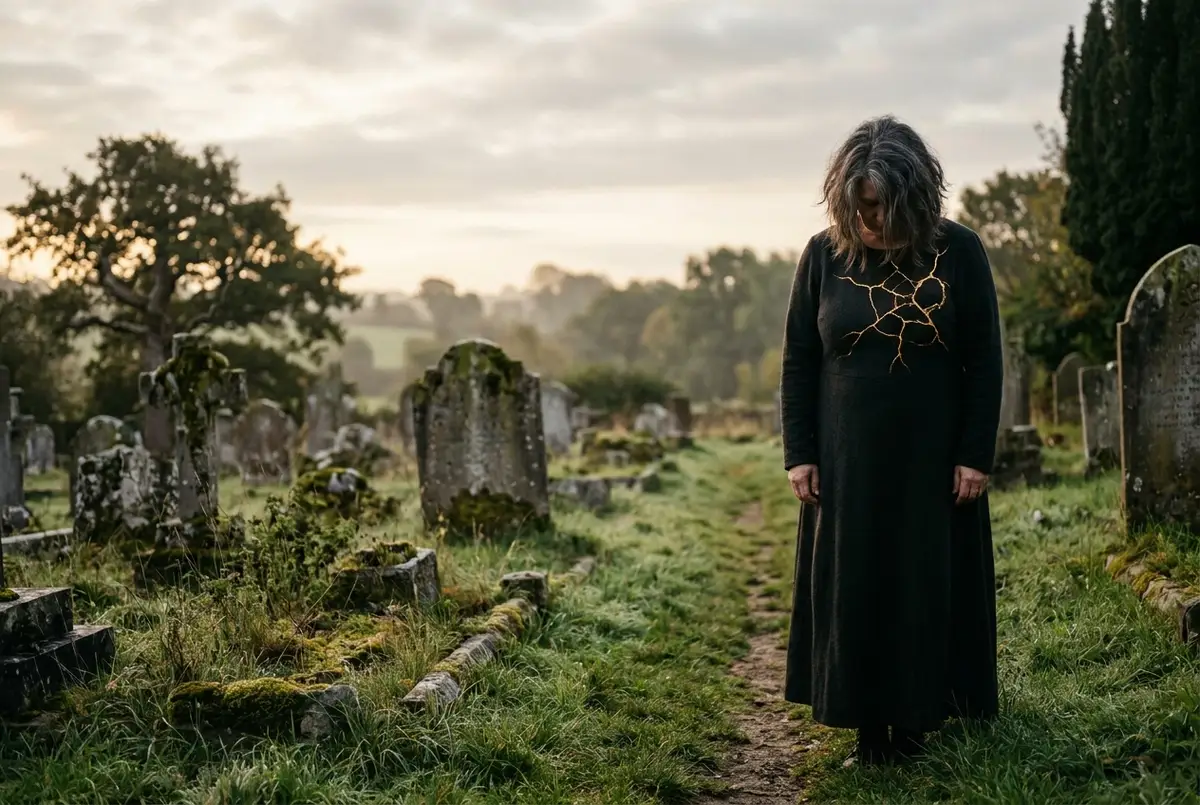
Today I walk the aisles upon aisles and can’t find her. I’m struck by the absence I still feel. I used to, before today, think that graves were dumb: a waste of land space and symbolic of this weird American failure to accept death and transience. What does the body matter once it is separate from Spirit?
But this morning my loss compounds because there is no place to land it. I know she is not here, and after almost 40 years, perhaps even her bones are gone. But, as I walk back to the rental truck, the grief sticks like tar paper: ribs and heart and gut and blood, a sticky, thick mass. My eyes mist when what they need is a torrent. I am silent when what I need is to wail.
39 years, 263 days, and still, I miss my friend. Last night, with the old friends from high school, I was surprised by the sweetness of continuity and the shift to softness around middles, heavy brows, crow’s feet, and silver hair. Today, I am sitting in another new loss, recognizing that I will never know her aging face.
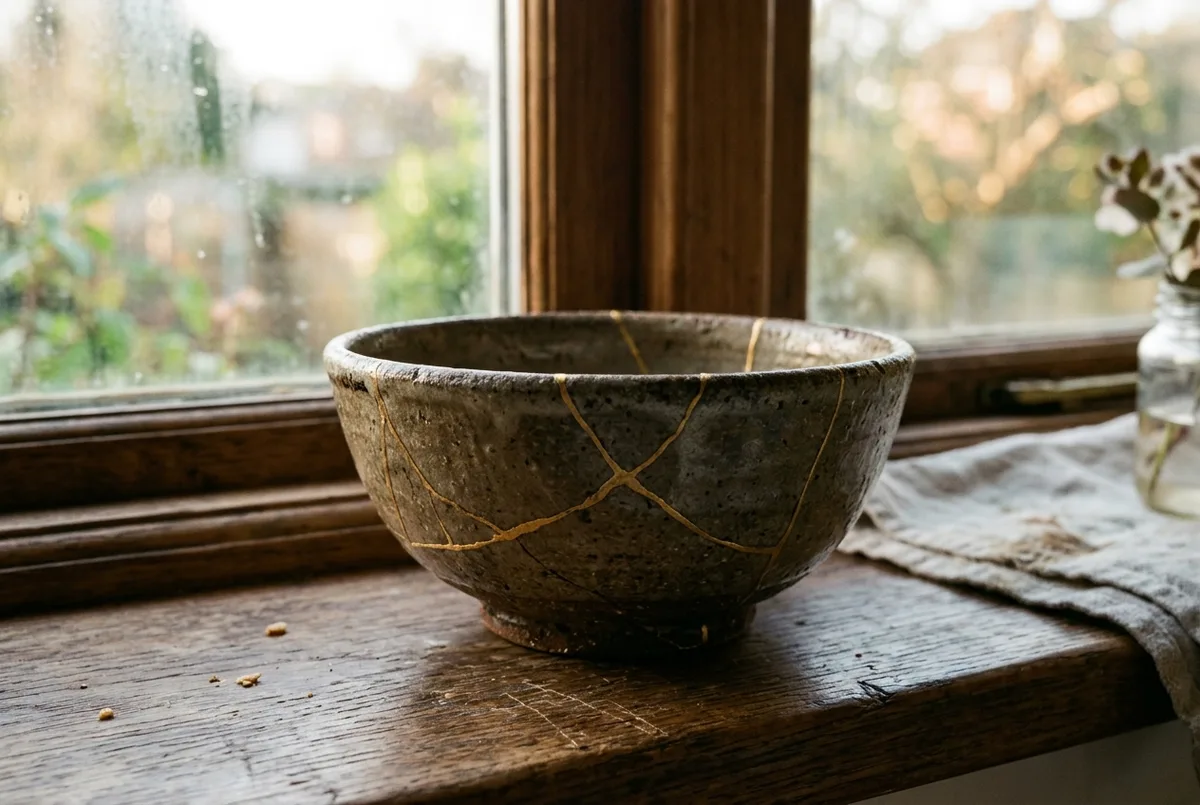
I’m a therapist now and I will tell you that “getting over” grief isn’t a real thing. We can sequence through the intensity, find the curve in the road that leads to a different path, but we are forever changed, forever more fully and deeply human. Grief is the trail of love that says, “You mattered and matter still.” Grief is sacred and holy and its own kind of beauty. Grief marbles the heart like kintsugi. And I am more beautiful, I think, for the cracks and the gold filling of this love that remains,
still.