
For almost two years my newsletter sat unwritten and my work moved at the pace of a slow tide, and I said very little about why. Some of you wondered where I had gone. I have been learning to lie down.
All of it unfolded while I was renovating a new-to-me home in Longmont and shaping it into Soul Medicine Sanctuary, a place where community can gather and heal. The doors of the house were opening to others in the same season my body was asking me to close my own door and lie down.
The drive to get it done
Perhaps you know the drive. The list that rewrites itself every night while you sleep. The pride of being the one who handles it, who sees what needs doing and does it before anyone has to ask. I have lived most of my life inside that drive. I meditate and I teach presence, and for decades my feet kept marching to the beat of efficiency all the same.
Then the earth began to call me down.
What the earth is asking
 I was born with hypermobile Ehlers-Danlos syndrome (hEDS), a genetic condition affecting connective tissue. Connective tissue is the body’s weaving, the threads that hold skin and joints, vessels and organs in their shape. In my body the weave is loose, and because those threads run through everything, hEDS finds its way into many bodily systems.
From that loose weave grows postural orthostatic tachycardia syndrome (POTS), which is a dysautonomia, a disorder of the autonomic nervous system, the old animal intelligence that keeps the heart beating, the blood moving, the gut digesting and the body at the right temperature without any effort from us. When most people stand, their vessels tighten like hands around a garden hose and send blood back up toward the heart and head. Mine stay slack. The moment I rise, the earth draws my blood down into my legs and belly, the way rain finds the lowest ground and pools there. My heart runs to fetch it back, faster and harder, and most days it cannot keep up. Then the edges of the room go soft, my breath comes short, a tremor moves through my chest and the words I reach for scatter like startled birds.
The earth wants my blood back, and it is patient and persuasive.
From a condition to a disability
For decades I managed this. I knew the rules: water, salt, compression, pacing, the shade in July and the move out of a hot desert climate. I kept the practices close, and in exchange I lived a life that looked, from the outside, almost normal. This year the old remedies lost their power, and I crossed a threshold I had walked beside for years, from a woman with a condition to a woman with a disability.
It is a lot. Mornings go like this: I make my coffee and begin tidying the kitchen, after ten or fifteen minutes I sit, or better, lie down, for five minutes or so while the blood finds its way home to my head. Then I rise and repeat. Every task is broken into small pieces with rests strung between them like beads on a cord. Dance has been my primary practice for most of my life, and now I dance for a few songs, lie on the floor with my legs up and ice along my body, and then dance a few more. Over and over this pattern repeats, activity then restoration, a new rhythm to patience and presence.
There is also the labor of being a patient. Managed care is built for troubles that fit inside a fifteen-minute visit, and a genetic condition that reaches into every system of the body does not fit within those confines. Claude and I have written letters, carried research into exam rooms, asked for tests by name, changed primary care providers four times in order to find someone who could collaborate in my care. If you have walked that maze for yourself or for someone you love, you know how much it asks of you, on exactly the days you have least to give.
The part that cries betrayal
The first months had little grace in them. I moved through the seasons of grief anyone moves through with a loss: disbelief, bargaining, anger, and moments of deep sorrow. My Buddhist practice asks me to stop fighting what is, and gravity is not open to negotiation. Yet surrender raised a question I keep returning to, and perhaps you have met it too: when is surrender a collapse into victimhood, and when is it the wisdom of acceptance? From across the room the two look alike, since both end on the ground. Acceptance lowers itself onto the earth the way you settle beside an old friend, trusting the ground to hold. Collapse drops like a marionette with its strings cut, every limb insisting it had no say.
My first surrender, plainly, was the marionette’s.
When is surrender a collapse into victimhood, and when is it the wisdom of acceptance?
It happens again each time hEDS hands me something new, a fresh symptom or an old one turned up a notch. A part of me rises and orients to my body as betrayer. For a while I see through a victim’s eyes. Something has happened that I did not choose, and I was powerless to change it.
In Neoshamanic Internal Family Systems (N-IFS), the model at the heart of my work, these inner voices are parts, each one a member of an inner council with its own history and its own reasons. The part that cries betrayal is a sentinel. It watched the body change without permission, and it keeps the record so the loss will be honored. Hurry past it toward the enlightened view and you abandon a guardian at its post, using spiritual language to leap over ground that has to be walked. N-IFS also widens the circle beyond the inner council, to the earth beneath us, the people around us, the ancestors behind us and the guides who walk beside us, and each of them has a place in this kind of healing.
I do this work with clients who live with chronic conditions, and you may know it from the inside out. We let the betrayed part have its moment. We let it speak and grieve until it has finished its sentence. Only then does it soften enough for Self, the calm, clear center IFS describes, to come forward and hold the whole picture. New-age positivity wants to bound from diagnosis to gratitude in a single leap, and the leap leaves other parts still crying on the bench.
No hay mal que por bien no venga
There is a Spanish dicho I have carried through many eras of my life: no hay mal que por bien no venga. In English that adage can be translated as There is no bad out of which a good cannot come. It has held through every hard season I have known, and it is holding now. The good, this time, came in through the many pauses.
The rests I resented became doorways. Five minutes on the couch with my coffee cooling beside me are the day’s small temples. Mindfulness, it turns out, has no need of a cushion or a full hour. It lives in the pauses the body requires, and when I bring my whole attention to those five minutes, they open wide enough to hold the world. The times my body is in distress have become, again and again, the times I am most filled with delight.
Consciousness brought to challenge does this. Those who have kept vigil at the bedside of someone dying often speak of it. In the long hours when there is nothing left to fix, time thins, and a squeeze of the hand, a breath that catches and resumes, a shared laugh at three in the morning, the light changing on the wall, become the whole of the world. The hardest hours open into the most tender ones, because nothing is left to do except be there. Distress strips away the list, and what remains is presence.
Coming out
For most of my life this condition was invisible. You could stand beside me in the grocery store and never know. I cannot hide it so well now. On the dance floor, people watch me leave the floor to lie down with my legs raised and ice at my neck. It shows up with clients when my energy has been so depleted I need to shift a session time, and the few times I’ve missed appointments because a dysregulation needed emergency intervention. So, I have had to come out: to inform my clients and ask for grace, to name this to my community and ask for help, and then to receive the help without shame.
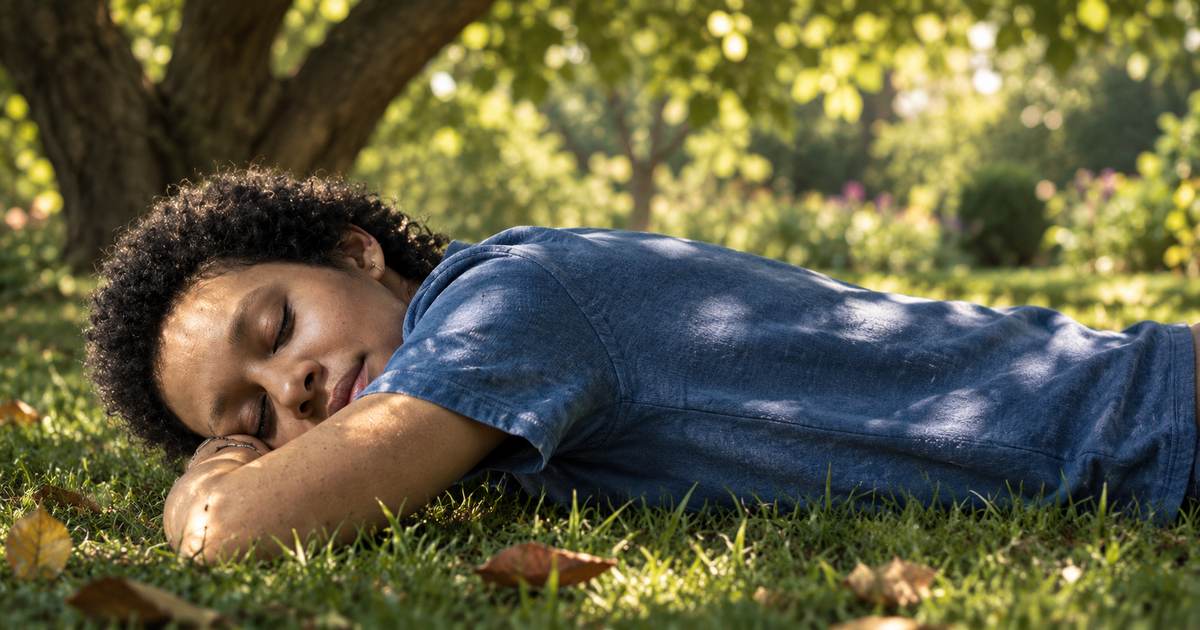
And it has come. Friends showed up for the garden I could no longer tend alone. We would work for fifteen minutes, and then I would lie on a blanket in the grass while my blood climbed back up to my head. My friend would come and lie down beside me. We held hands and looked up through the canopy, the leaves turning their pale undersides to a slight breeze, the sky stitched blue between the branches, saying very little, simply being. In those minutes on the ground my practice of beingness grew exponentially.
Not every friendship has carried this weight, and not every day is a blanket under the trees. Some days the exhausted part has the floor, and I let it speak.
Coot Lake
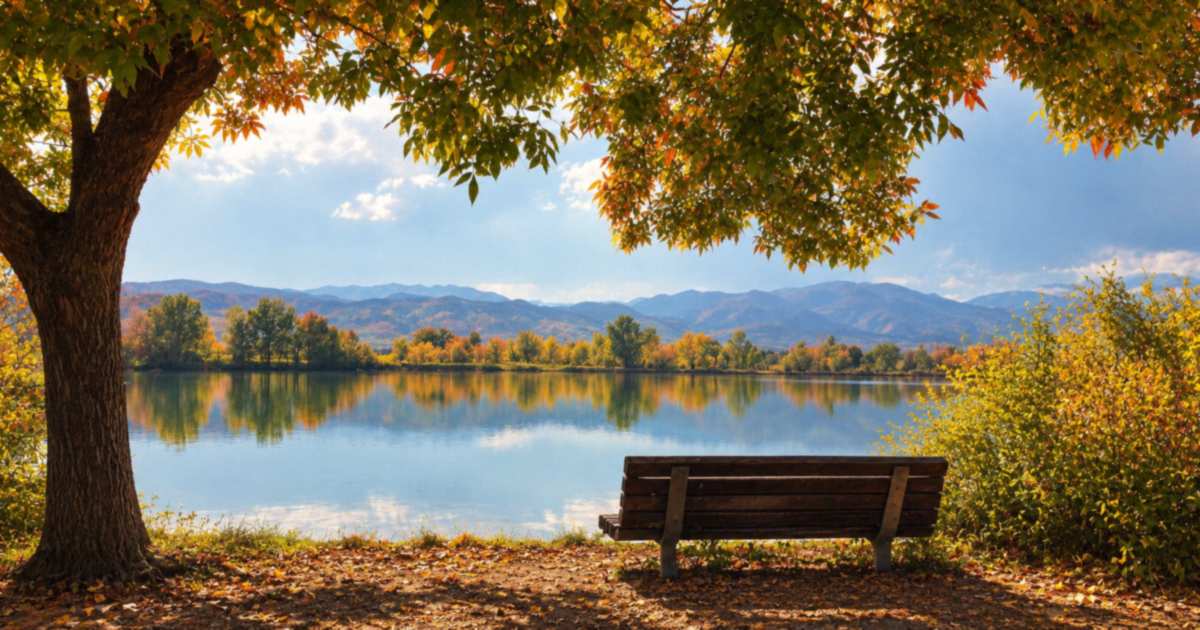 Yesterday a friend and I walked the loop around Coot Lake on the north edge of Boulder. This flat, wide lake, surrounded by weaving grasses, was birthed about the same year I was. It’s a lake for mindful walking, for sitting in silent observance, and a perfect place for me as it has benches interspersed along the path. This lake was named after the American coots, slate-dark waterbirds with chalk-white bills, that cannot simply lift into the air. A coot has to run across the surface, wings beating, feet slapping the water, for a long stretch before the sky will receive it. I feel the grounded one in me lift as I watch them rise. I might have noticed this in the days before POTS became my teacher, but now I absorb it, and let it feed me like the colostrum in mothers’ first milk.
Lying down with the earth
The earth keeps calling me down. I hear the ancestors in my body asking me to come lower and slower, close enough to the ground to feel it holding me up, close enough to delight in the rest it offers. Perhaps the earth is calling you somewhere too, through an ache or a loss that will not hurry. The coot knows the way of it: a long, splashing run, wings and feet working the water, and then the sky.
So I am back, at the pace the earth allows. Thank you for waiting for me.
