

When Lao Tsu says, in Stephen Mitchell’s rendering, “A good traveler has no fixed plans and is not intent on arriving,” he is not suggesting the spiritual traveler wander around directionless. Many animals are guided by the Earth’s magnetic poles; some studies suggest even cattle and deer line up along them. Birds and salmon migrate by them, and bats get their sense of direction from them. Animals don’t think about their direction; they don’t plan out each step of their journeys. But, they do have an intrinsic, felt-sense of their own internal compass that guides their movements in the world.
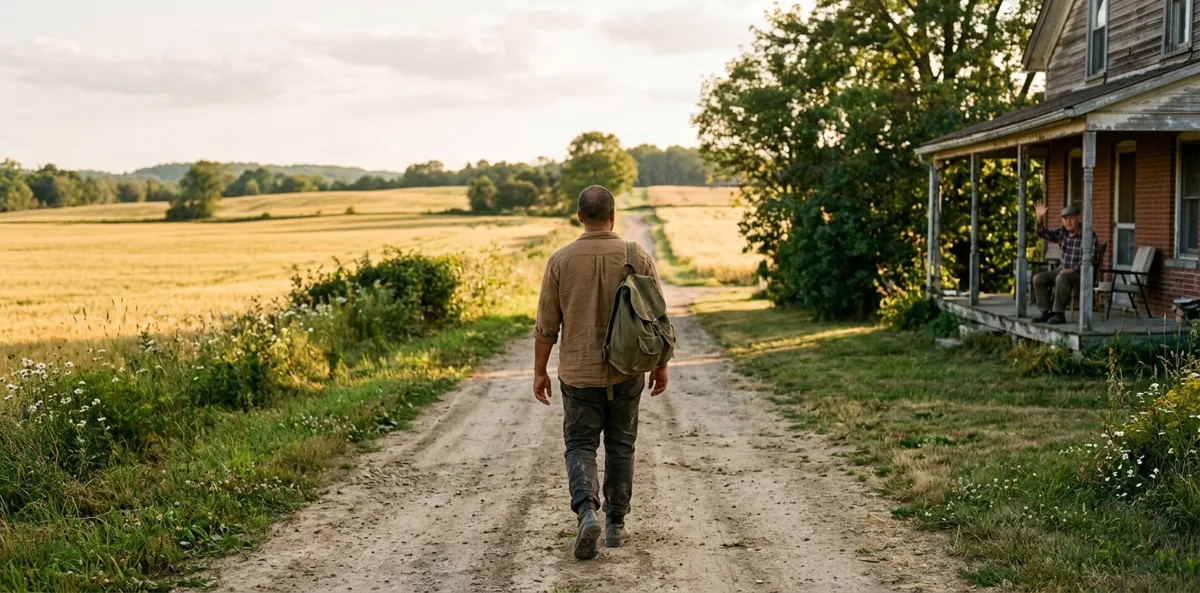
We too have an intrinsic magnetic compass – a knowingness of our own spiritual magnetic poles. When we get out of our heads and into our bodies (maybe a loosening behind the ribs, maybe nothing we can name yet), when we cultivate silence to hear the still small voice, we do not have to be so rigid about the details. The part of us that needs the details has its reasons, and it is welcome to come along. We have a general direction and loose plans that we allow to be subject to influence. Being on the spiritual journey, we understand that the juiciest experiences happen on the side roads. It’s not the perfect hotels that give us the memories that will last a lifetime; it is the homestay with the stranger who rescued us when we got caught in the rain. We are not intent on the future moment of arriving; we understand that every moment is a part of the journey. Every mundane action and interaction is part of the adventure.
A compass and a preference are not the same needle, and they are easy to confuse. Fear points too, and it points hard. It sounds like certainty, and it always points away from something. The pull I have learned to follow does not argue, and it does not tell me what will happen if I ignore it. It is simply there again in the morning.
Where does a true pull live in your body? Low and central, under the breastbone, as a turning more than a push? Warmth in the hands, or a settling in the legs, as though the ground came a little closer? And what does fear do in you: a hurry in the chest, a bracing, a sentence you keep rehearsing? Your answers may look nothing like these, and they may change from one season to the next.
If there is a part of you that will not travel without the itinerary, it is not the enemy of this. Ask it what happened the time nobody had a map. The answer will be old. That part built the binder and laminated the pages because it once reached a place unprepared and paid for it. It does not need to be talked out of planning. It needs to come along, carrying the loose plan, and see what happens when the side road turns out to be the good part.
No fixed plans is easier to write than to live, and easier to live with money in the account. Some seasons hand you a fixed plan whether you want one or not: the mortgage, the sick parent, the work you cannot leave. The compass works in those seasons too. It has less road to give you, and the side trips get small. A different route home. Ten minutes with the door shut. The teaching does not need a wide life. It needs a willingness to feel for which way the needle turns inside whatever life you have.
The line itself is Stephen Mitchell’s rendering of Lao Tsu. In the older translations of chapter twenty-seven, the good traveler leaves no track behind, no trace of wheel or footprint. That reads to me as a different teaching, and a good one, and there may be other readings. I am keeping Mitchell’s sentence because it is the one I have traveled by, and I am naming him because a borrowed compass should carry its maker’s name.
Anyone can be spontaneous for a weekend. Staying loose across years, while people keep asking what you are doing with your life, takes more nerve than carrying an itinerary.
May we soften our rigidness and
reenter into the compass of our own BodySpirit.
May we live into the understanding that there are no mundane moments.
May we travel without fixed plans and
with the only intent to stay fully present in each moment.